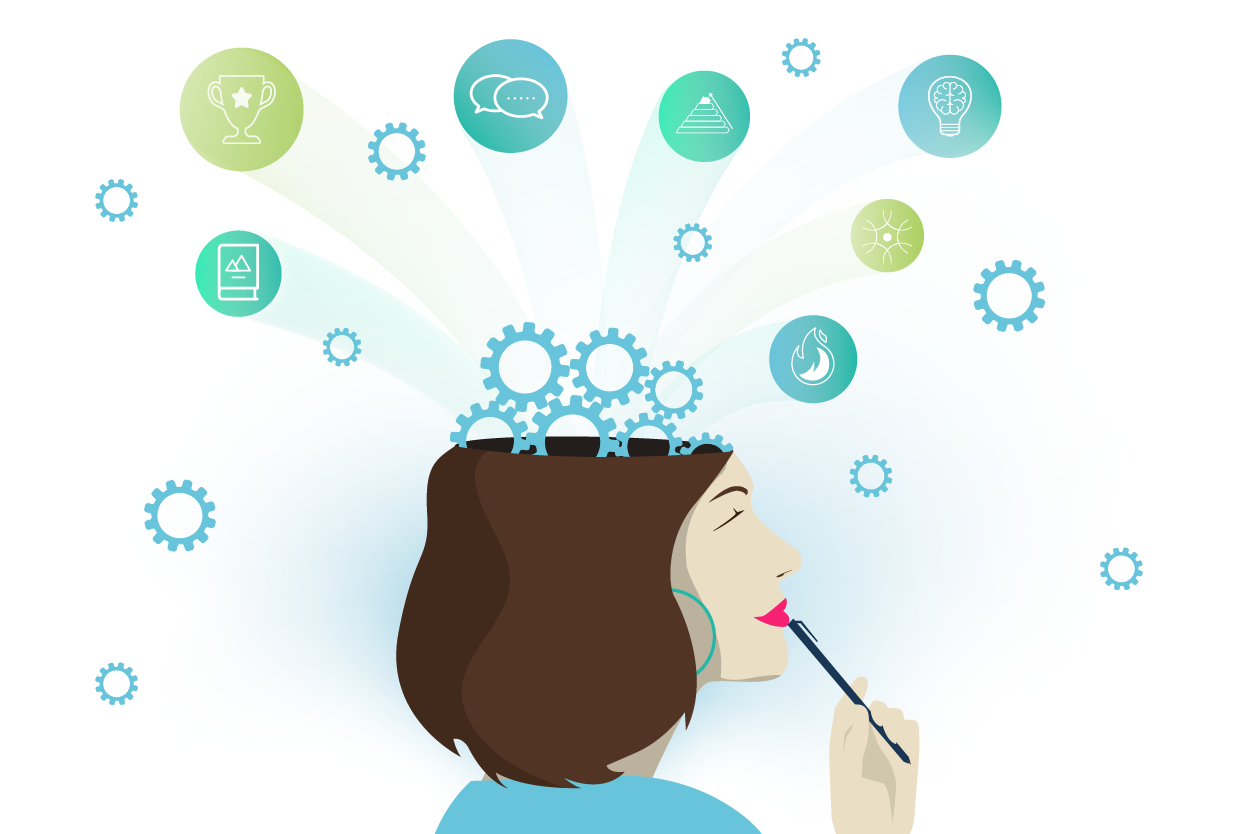
There is a deeply counterintuitive truth at the heart of how memory works: the act of trying to remember something strengthens that memory far more than the act of simply reviewing it. This principle — known as the testing effect or retrieval practice effect — has been documented consistently across decades of cognitive psychology research, and it has profound implications for how we learn.
When most people think about studying, they imagine sitting down with a book or set of notes and reading them carefully. Highlighting, re-reading highlighted passages, perhaps making more notes. It feels productive. It feels like learning. But research consistently shows this form of passive review produces far shallower, more fragile memory than approaches that require you to actively retrieve information — to struggle, guess, and recall.
Interactive quizzes, done well, are one of the most direct ways to harness this effect. This article explores why, and what makes the difference between a quiz that genuinely supports learning and one that is merely diverting.
The Testing Effect: What the Research Shows
The testing effect refers to the finding that taking a test on material you have studied produces better long-term retention than additional study alone. It was first documented systematically in the early twentieth century, but the past two decades have produced a remarkable body of confirmatory evidence across different ages, subjects and educational contexts.
A landmark study by Roediger and Karpicke (2006) demonstrated that students who studied a passage and then took a recall test retained significantly more information one week later than students who spent the same time re-reading the passage — even though the re-readers performed better on an immediate test. The gap between groups widened over time, suggesting that retrieval practice builds a particularly durable form of memory.
Why? The mechanism appears to involve the way memory consolidates during retrieval. When you try to remember something, your brain does not simply retrieve an existing record — it partially reconstructs the memory, in the process strengthening the neural pathways associated with that piece of knowledge. This reconstruction effort, even when it results in an error, seems to prime the brain to store the correct information more robustly.
"Retrieval is not merely a readout of stored knowledge — it is itself a powerful memory modifier that produces learning."
— Roediger & Butler, The Critical Role of Retrieval Practice in Long-Term Retention
Why Quizzes Work Better Than You Might Expect
Given this evidence, it might seem like any quiz would be equally beneficial. But not all quizzes are created equal, and understanding the mechanisms behind retrieval practice helps explain what makes certain quiz designs more effective than others.
Desirable Difficulty
Psychologists use the term "desirable difficulty" to describe tasks that are challenging enough to require effort, but not so difficult that they become discouraging. Quizzes that are too easy produce minimal benefit — you don't need to reconstruct the memory because it is immediately accessible. Quizzes that are too hard lead to frustration and guessing without comprehension.
Well-designed quizzes find this productive middle ground. Questions should be answerable if you have genuinely engaged with the material, but they should require some mental effort — not merely pattern recognition. This is one reason why multiple-choice questions, while less demanding than free recall, still produce meaningful learning benefits: the process of evaluating each option requires you to engage meaningfully with the knowledge domain.
Feedback Matters Enormously
One of the most important elements of an effective learning quiz is immediate, explanatory feedback. Research by Butler and Roediger (2008) showed that when test-takers receive feedback — especially when they have answered incorrectly — their subsequent retention is dramatically improved compared to taking a test without feedback.
But there is a nuance here worth noting. Feedback that simply reveals the correct answer produces some benefit. Feedback that explains why the correct answer is correct — the underlying principle, the context, the mechanism — produces far greater benefit. This explanatory feedback effectively turns the error moment into a new learning episode, embedding the correct information in a meaningful framework rather than just correcting a surface-level mistake.

The Role of Spacing and Interleaving
Retrieval practice does not operate in isolation. Its effectiveness is strongly influenced by when it takes place relative to the original learning, and how it is distributed across multiple sessions.
Spaced Practice
Memory research has long established the spacing effect: information studied across multiple well-separated sessions is retained far better than the same amount of study concentrated into a single block — what students often call "cramming". Quizzes are particularly well-suited to spacing because they can be short and targeted, making them easy to distribute across days or weeks without requiring extended study sessions.
For someone using an interactive quiz platform, this means that returning to a topic quiz a few days after first attempting it is likely to produce substantially better long-term retention than taking the same quiz several times in a single sitting. The optimal spacing interval tends to increase as the material becomes better consolidated — a few days initially, then a week, then several weeks.
Interleaved Practice
A related concept is interleaving — the practice of mixing different topics or question types within a study session, rather than focusing on one at a time. While blocked practice (studying all of topic A, then all of topic B) feels more orderly and often produces better performance in the short term, interleaved practice consistently produces better long-term retention and, crucially, better transfer of learning to new contexts.
This occurs because interleaving forces the brain to repeatedly identify which knowledge domain is relevant before applying it — a process that strengthens the discriminative cues associated with that knowledge, making it more retrievable in novel situations.
Quizzes and Metacognition
Beyond their direct effect on memory, quizzes serve a second vital function: they give learners accurate information about what they actually know versus what they only think they know.
Research on metacognition — the capacity to monitor and regulate one's own thinking — consistently shows that people are poor judges of their own knowledge when using passive study methods. Re-reading a chapter can create a feeling of fluency and familiarity that is easily mistaken for deep understanding. Quizzes puncture this illusion. When you confidently select an answer and find you are wrong, or struggle to remember something you were sure you knew, you receive a more accurate signal about where genuine knowledge gaps exist.
This function — what researchers call "calibration" — is arguably as important as the direct memory benefit. Knowing what you don't know allows you to direct future study effort more efficiently, avoiding the trap of spending time reinforcing knowledge that is already solid while neglecting weaker areas.
Engagement and Motivation
Learning research does not take place in a motivational vacuum. The most cognitively optimal study technique is only useful if people are willing to use it, and willingness depends partly on how the activity feels during and after the experience.
Quizzes — particularly well-designed interactive ones — tend to fare well on this dimension. The combination of challenge, feedback, score progression and completion produces a modest but real motivational effect. Getting a question right feels satisfying. Getting one wrong, when followed by a clear explanation, typically feels instructive rather than demoralising. The progression structure of most quiz formats provides a sense of forward movement that long study sessions often lack.
This does not mean quizzes should be designed primarily for entertainment or engagement at the expense of educational rigor. But it does mean that the engagement properties of a quiz are not trivial — they contribute meaningfully to how likely someone is to return and continue learning.
Practical Implications for Learners
Given everything discussed above, what does this mean for someone who wants to use quizzes effectively as part of their learning practice?
First, try quizzes before you feel fully ready. The temptation is to study until you feel confident and then test yourself. But the research suggests that attempting retrieval when you are uncertain — struggling with the question, drawing on partial knowledge — produces better outcomes than waiting until review feels smooth and easy.
Second, read the explanations, especially when you are wrong. The explanation following an incorrect answer is, from a learning perspective, among the most valuable moments in any quiz session. Approach it not as a correction but as a teaching point.
Third, return to the same material after a gap. A quiz you found moderately challenging this week will be worth revisiting in several days' time. The second attempt will likely produce stronger retention than multiple repetitions within the same session.
Fourth, pay attention to where you consistently struggle. Quizzes are diagnostic tools as much as learning tools. Patterns of difficulty reveal genuine knowledge gaps that deserve specific attention.
Conclusion
Interactive quizzes are not merely an entertaining way to pass time or a light diversion from serious study. When designed thoughtfully — with appropriate challenge, meaningful feedback and a structure that encourages repeated engagement — they represent one of the most evidence-backed tools in the learner's toolkit.
The testing effect is not a marginal finding or a theoretical curiosity. It is among the most robustly replicated results in cognitive psychology, and it has a clear practical implication: the question is more powerful than the review. Asking yourself what you know, rather than telling yourself what you know, builds the kind of memory that lasts.
At Toto Quiz, every question we publish is written with this principle in mind — not just to test knowledge, but to build it.